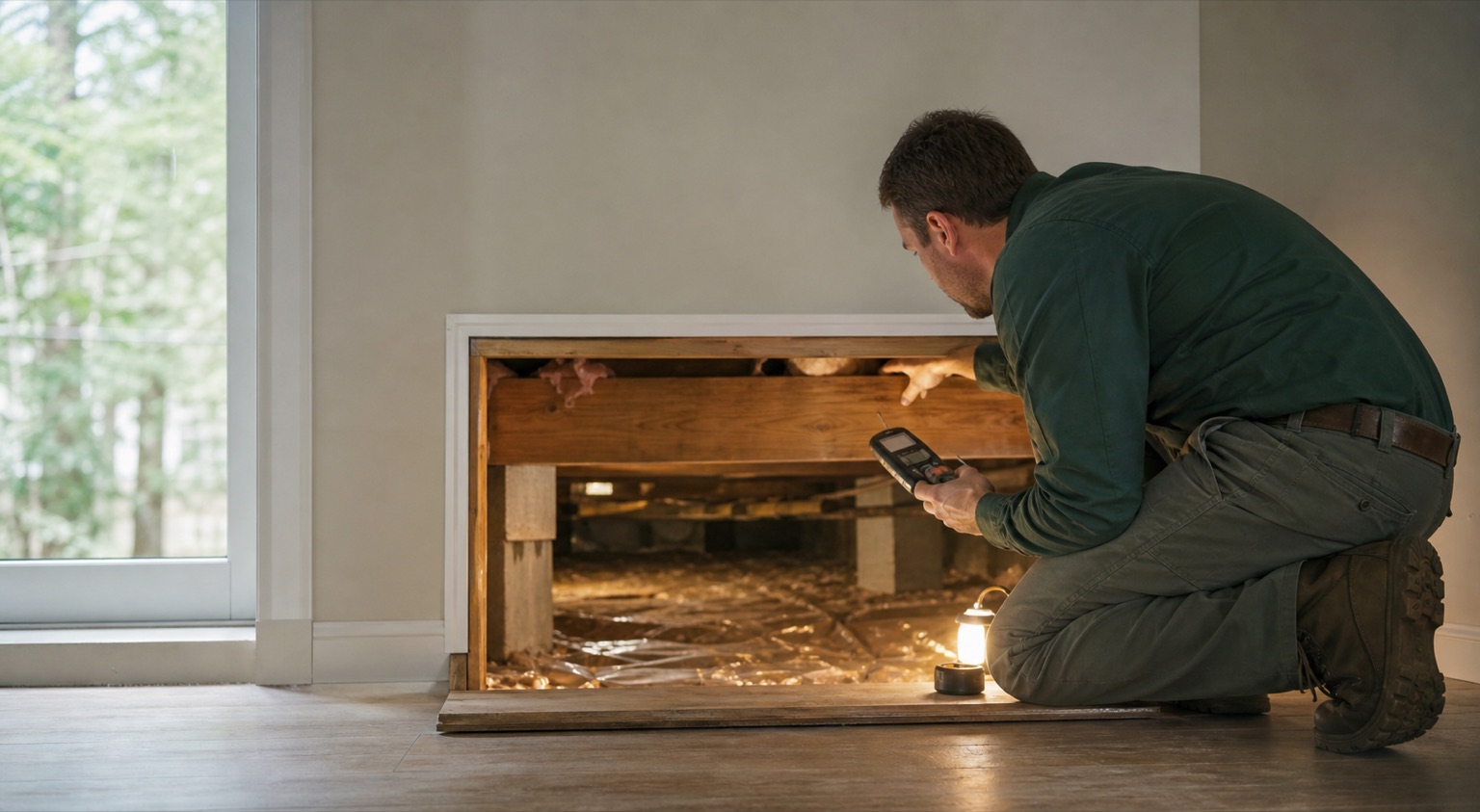
How water removal fits the response
Start with the source
Timing and source help frame which areas and materials deserve attention.
Map the likely moisture path
The visible edge is a starting point, not always the full affected area.
Match the method to the property
Water removal should fit the volume, access, source, and material conditions.
Use information to guide next steps
Follow-up moisture information supports better drying and material decisions.
A Knoxville plan should fit the property
Knoxville’s hills, heavy rain, crawl spaces, basements, roof exposure, and mix of building materials can create complicated moisture paths. The response should be grounded in what happened at the property and what is actually wet.
A useful call should identify the likely source, timing, connected rooms, material layers, and any area below or beside the visible damage. Ask how the scope distinguishes removable water from moisture retained in flooring, wall bases, cabinets, insulation, or other assemblies.
Before you commit to a next step
- Ask which areas and materials are included in the moisture assessment.
- Ask how progress and the drying endpoint will be evaluated.
- Separate drying and cleanup decisions from repair or reconstruction work.
- Make sure the explanation is specific to the property, not just the equipment.